FlyBeeper SunVario
Solar audio vario with a capacitor instead of a battery. Nothing to charge, nothing to wear out — and 60 seconds on USB-C is enough for a flying day.
Not taking orders right now
The factory backed out of a batch I had already paid for, and I’m moving production to a new manufacturer. The next SunVarios won’t be ready before spring 2027 — rather than take your money for that, I’d like to write to you when they are. FANET Vario and mini BT are in stock and ship in 1–3 business days.
What's in the box
FlyBeeper SunVario and a quick-start card.
Charges from any USB-C cable — or from the sun, which is the point
QR code on the label opens the manual — EN / DE
Key features
A 10 F lithium-ion capacitor stores the energy. No cell to age out, no charge controller, no swelling after two seasons.
Beeping on its own without sun, measured on hardware. 8.5 h in a real flight with the phone connected.
That much USB-C is enough for a flying day. From completely flat, half an hour of sun fills it — and in normal use the sun keeps up on its own.
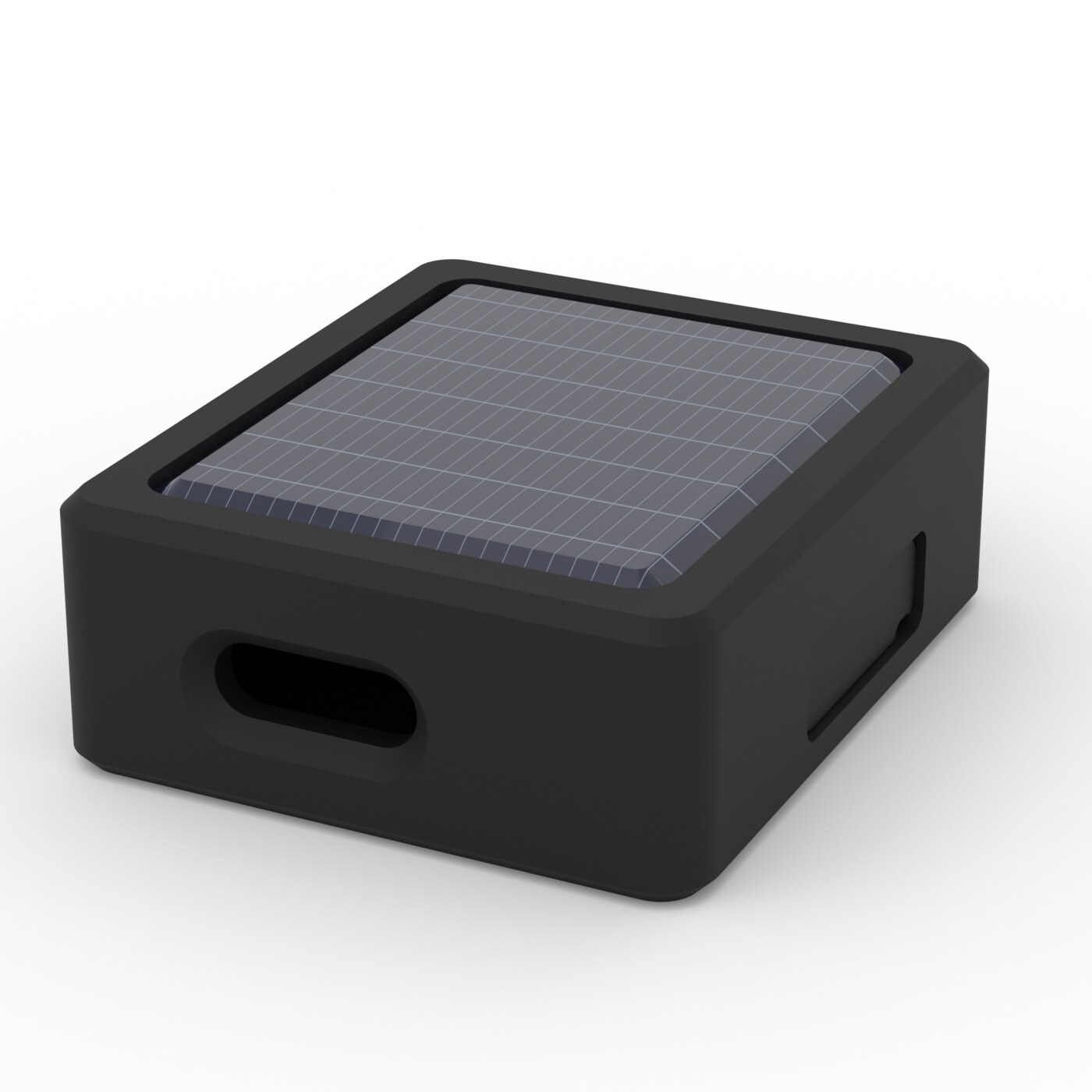
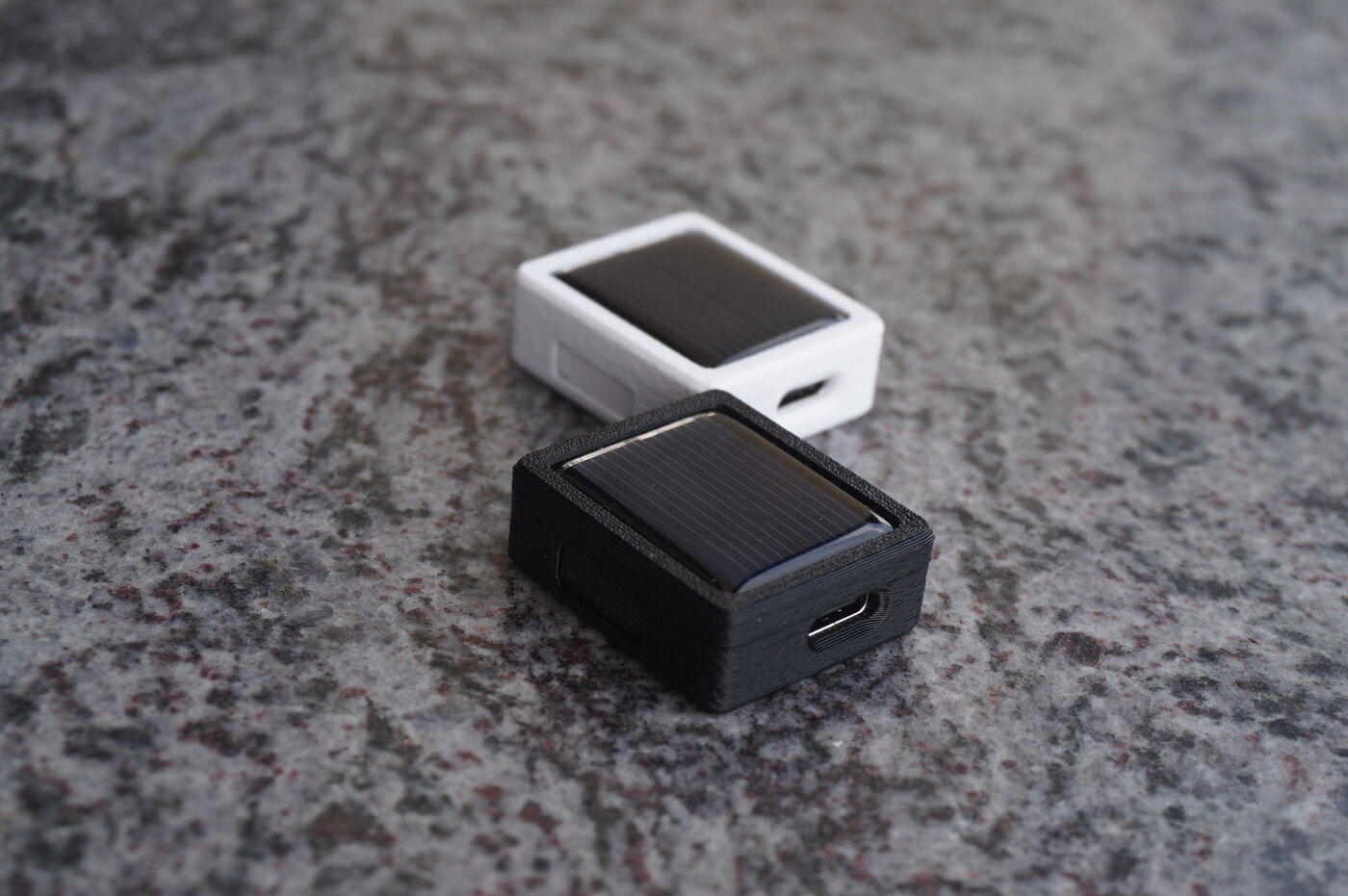
One of the lightest varios with a solar panel — and it needs no battery to be that light. 29 × 34 × 12 mm, one button, panel across the whole top face.
Sixty seconds, filmed on the desk
The bar and the stopwatch follow the real charge curve, not an animation. The beeping at the end is the device itself. Sound on.
Full specifications
Vario
- Sensor
- SPL07-003 barometer, polled 62 times a second
- Sensitivity
- ±2 cm — same class of sensor as the whole FlyBeeper line
- Audio
- Piezo in a tuned resonator cavity (~1.1 kHz)
- Volume
- 3 levels + silent, cycled with the button
Power
- Energy storage
- 10 F lithium-ion capacitor — no battery
- Solar panel
- Across the whole top face, feeding an energy harvester into the capacitor
- Runtime
- ~18 h beeping unconnected · 8.5 h flying with the phone · 52 h idle
- Charging
- 60 s on USB-C is enough for a flying day · 30 min of sun from flat empty
- Working window
- 3.8 → 2.7 V, 3.1 mAh — hardware cut-off protects the capacitor
- Operating temperature
- Designed for −5 °C and above; very probably works colder, with sun
Controls
- Button
- One — hold to power on/off, press to change volume
- Auto power-off
- On inactivity, and at the low-voltage cut-off
Mechanical
- Body
- Three printed parts — tray, outer frame over the panel, separate button strip
- Dimensions
- 29 × 34 × 12.1 mm
- Weight
- 9.8 g — panel, capacitor and enclosure included
- Water resistance
- None — keep it dry
Software
- Firmware updates
- Over the air via Bluetooth
- Configurator
- config.flybeeper.com — from the browser, nothing to install
- BLE telemetry
- Pressure 10 Hz as a standard characteristic · battery level
- Vario source for
- xcTrack · SeeYou Navigator · LK8000 · FlySkyHy
Works with
 xcTrack
  SeeYou Navigator
  FlySkyHy
  xcSoar
 The device publishes barometric pressure over Bluetooth LE as a standard characteristic, so flight apps pick it up as an external sensor — xcTrack, SeeYou Navigator, LK8000, FlySkyHy. Everything is configured from the browser at config.flybeeper.com; no app to install and no drivers.
How ordering works here
Devices are built in batches
If your order lands on a unit that is already built, flashed and tested, it goes out within 1–3 business days.
If the batch is gone, yours is in the next one
Boards come from the factory, enclosures are printed and assembled here in Slovenia. Three to four weeks from payment — usually three.
You will know which one you are
I email you within a day of your order with the real date, and you can cancel for a full refund at any point before your device ships. No reason needed.
Payment is taken once, at checkout — there is no second charge later. This is a small workshop, not a warehouse: I would rather name a longer date and beat it than promise 1–3 days and go quiet.
FAQ
Do I ever have to charge it?
Why a capacitor instead of a battery?
What if there is no sun — an overcast week, or winter?
How is it different from the mini BT?
Does it have GPS or FANET?
How cold can it go?
Is it waterproof?
When will it actually ship?
How much is shipping and how long does it take?
What's the return policy?
How long is the warranty?
Will I get an invoice? What about VAT?
Pre-order your SunVario
A few units in hand, the rest built to order. Ships from Slovenia. PDF invoice by email.
Not taking orders right now
The factory backed out of a batch I had already paid for, and I’m moving production to a new manufacturer. The next SunVarios won’t be ready before spring 2027 — rather than take your money for that, I’d like to write to you when they are. FANET Vario and mini BT are in stock and ship in 1–3 business days.
Ships from Slovenia
How it's built
Long technical write-ups from the workshop blog: measurements, dead ends and the reasoning behind the design.